
Scientists in Exile: Between Transnational Repression and Collective Suspicion
Dmitry Dubrovsky
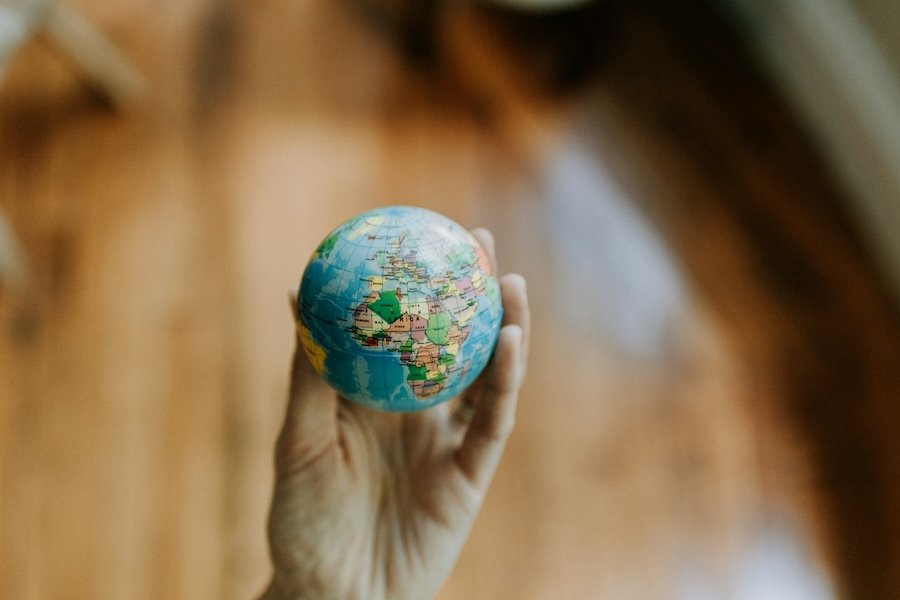
Photo: The challenge for academic refugees today lies not only in choosing a new country of residence, but also in the lack of spaces where their academic status can be restored without additional suspicion. Photo by Kelly Sikkema on Unsplash
There’s an old Soviet joke: a Jewish man who has spent years trying to obtain permission to leave the USSR finally finds himself in front of the KGB, where he is shown a globe and told, “We’re fed up with you, Rabinovich. Pick any country and leave.” He studies the globe for a long time, trying to choose a destination, and then asks, “Do you happen to have a different globe?”
This joke quite accurately captures the situation of many scientists forced to leave authoritarian regimes—especially those considered the most dangerous in the world.
On paper, a world of academic mobility, support programs, and international solidarity opens up before them. In practice, however, it turns out there may be no suitable place for them on the entire globe.
Exodus from Nazi Germany
Violations of academic freedom under repressive and authoritarian governments often cause scientists to emigrate from a country. One of the most famous examples is the exodus of researchers from Nazi Germany.
At the same time, however, in countries fighting the Nazis, the mere fact of holding German citizenship frequently became grounds not only for considering the refugees (including the Jewish population) “enemy aliens,” but also for confining them in internment camps. Furthermore, security restrictions hindered citizens of these countries from engaging in scientific work, even when that work was clearly directed against the Nazis. For instance, the anti-fascist German physicists Otto Frisch and Rudolf Peierls were long unable to begin work on secret projects because they could not obtain the necessary security clearances.
The discovery of a Soviet agent—Klaus Fuchs—among the German physicists working on the American atomic bomb dealt a severe blow to all refugee scientists. They were often denied the opportunity to work solely on the basis of their background and country of origin.
Academic Refugee Status Today
Much time has passed since then, but the general situation seems unchanged.
Academic refuge is sought mostly in democratic countries, where displaced scholars hope to continue their teaching and research activities. Yet these countries, as before, are becoming areas of new tension.
On the one hand, universities and research centers demonstrate solidarity with repressed academics, creating special support programs and offering temporary positions and grants.
On the other hand, these very same institutions increasingly operate based on a logic of security, sanctions, and political accountability—especially regarding individuals from countries perceived as “dangerous” or “toxic.” Whereas in the past these were communist nations, the list now includes Iran, Belarus, Cuba, Venezuela, and Russia.
On the Borderline
The position of academic refugees is defined not only by global academic hierarchies, but also by new sanctions, security policies, and what might be called “academic overcompliance.”
This refers to excessive restrictions that do not always stem directly from legislation or formal sanctions. They are imposed by universities, foundations, editorial boards, or individual organizers due to legal uncertainty, reputational risks, and moral or political pressure. As a result, scientists find themselves spending a lot of time teetering on the borderline, in a liminal state: they are formally included in the European academic environment yet remain structurally marginalized within it.
Three Stages of Emigration
In line with the concepts of van Gennep and Victor Turner, contemporary studies approach emigration as a state of liminality.
Applying van Gennep’s framework to the emigration of scientists, we can identify three stages:
- separation from the former social order
- liminality as a stripping away of previous social attributes
- reintegration with a new set of social attributes
In the case of academic exile, the first stage—separation—is often forced through repression, dismissal, the threat of criminal prosecution, or the moral impossibility of continuing to work in a country waging an aggressive war.
However, the subsequent stage of integration into the new academic system proves incomplete, and the state of liminality becomes permanent. The scholar loses a significant portion of their former symbolic capital: their courses, publications in their national language, public lectures, institutional achievements, and academic reputation often become invisible or lose their value outside of their country of origin.
In this sense, academic emigration may be experienced as an “academic death”—the end of one’s former existence as a recognized academic subject.
The possibility of being “reborn” into the new system exists but is highly unequal. Scholars who are already embedded in English-language networks, have published in leading international journals, and hold degrees from prestigious Western universities have a significantly better chance of integrating successfully into a new academic environment.
In contrast, researchers from regional universities who have worked primarily within their national academic traditions find themselves in a much more vulnerable position.
Academic Imperialism
This situation also demonstrates the resilience of academic imperialism. The global academic “center” defines standards, theories, the language of publication, and mechanisms of recognition, whereas the “periphery” is often perceived as a source of data, case studies, and empirical material rather than as an equal producer of theory.
Forced migration exacerbates this dependence. Scientists from Russia, Syria, Ukraine, Türkiye, Iran, China and countries of the Global South seek out European and North American academic centers not only for their physical security, but for their access to infrastructure, grants, journals and legitimacy.
Upon moving to these centers, however, they rarely hold equal positions. They are more often included in projects as experts, consultants or purveyors of regional knowledge and far less often as research leaders or full-fledged shapers of the academic agenda.
Even academic solidarity programs devoted to protecting academic freedom reproduce these hierarchies. They provide assistance while simultaneously evaluating academic refugees according to the standards of the global academic center.
Universities offer protected positions; however, these are often temporary, unstable, and not equivalent to standard academic posts. This support serves simultaneously as a humanitarian gesture and as a means of securing flexible academic labor. This gives rise to a contradiction between the logic of solidarity and the logic of institutional exploitation.
“High-Risk” Scientists
The situation is particularly complicated for scientists from countries considered a “high security risk” in European discourse: Iran, China, Russia, Belarus, Cuba, Venezuela, and others.
These researchers face a double filter.
- As academic refugees, they are integrated into the unequal structure of academic imperialism.
- As citizens of states suspected of espionage, technology transfer, or exerting political influence, they are subject to additional restrictions related to research security, dual-use technologies, and the national interests of host countries.
In the technical and natural sciences, such restrictions are often linked to concerns regarding the transfer of dual-use technologies. One example is the restriction of Iranian citizens’ access to programs related to nuclear and missile technologies.
After 2022, many EU countries extended the same logic to students from Russia and Belarus as well.
In the Czech Republic, these restrictions affected programs in the fields of nuclear technology, cybersecurity, artificial intelligence, aviation, space, advanced materials, and related areas.
In Switzerland, graduates of Russian universities subject to sanctions have faced additional vetting steps or rejections during the admissions process.
While such measures are ostensibly justified by sanctions and security concerns, in practice, citizenship or institutional affiliation has often become the primary criterion. Reports from numerous countries and UN organizations highlight this issue, drawing attention to sanctions-linked violations of the right to research and education.
Collective Suspicion
This is where the third layer comes in: academic overcompliance. While sanctions are formal legal restrictions and security policies are institutional risk-prevention measures, over-compliance operates within a gray area.
Universities, foundations, conferences and journals begin to place restrictions on the participation of people who are not directly subject to sanctions. This appears to stem from a fear of violating often vague rules, a desire to avoid scandal, or an urge to demonstrate the correct moral stance.
As a result, individual assessments are often replaced by collective suspicion: a passport, a diploma, or a past affiliation with a university in a “suspicious” country (Russia, Belarus, Iran, China) itself becomes a risk factor for scientists who have left those countries—often precisely because of repression or the inability to work under normal conditions.
Victims or Representatives of the Aggressor?
This logic is particularly evident in the case of Russian scientists in exile. They are perceived simultaneously as victims of repression and as representatives of an aggressor nation.
In the first months following Russia’s full-scale invasion of Ukraine, some young researchers faced rejections explicitly attributed to their Russian citizenship. While such practices have since become less overt, they have not disappeared; they manifest as difficulties in applying for grants, participating in conferences, publishing work, and securing employment.
An additional factor that—as with Fuchs—has significantly complicated the situation for Russian scientists is a series of espionage cases involving Russian citizens or individuals of Russian origin: the cases of Russian spy Mikhail Mikushin in Tromsø, “journalist” David Gonzalez in Prague, and former University of Tartu professor Vyacheslav Morozov.
These cases are used as an argument for generalized suspicion toward all citizens of the “aggressor state.”
However, such measures never take into account individual circumstances, such as an anti-war stance, a history of persecution, the impossibility of returning, or a genuine break with Russian state institutions. The result is a repeat of history from eighty years ago: those who have fled Putin’s regime are viewed as a security threat “just to be safe,” even as, counterintuitively, they are the recipients of academic support.
This creates significant tension between the pole of solidarity and the policy of securitizing science and higher education.
No Discussion
The inability to openly discuss these restrictions presents a particular challenge. Russian scientists in exile often find themselves in a state of “aphonia,” unable to speak about their own problems without risking accusations of downplaying the tragedy facing Ukrainian academia or echoing the official Russian narrative regarding “Russophobia.”
Attempts to critically discuss excessive restrictions are often met with an aggressive reaction: “Russian scientists have no right to complain while they are bombing Ukraine.”
This moral framework renders the very issue of academic overcompliance almost unspeakable. Even outright and completely unjustified bans on participation—for instance, in academic conferences, research projects, or grant applications—are accepted as a matter of course by many scholars in exile.
* * *
Ultimately, academic refugees from countries associated with war and authoritarianism find themselves in a paradoxical position. They are simultaneously objects of academic solidarity and of academic exclusion.
Politicians who ought to defend democratic societies and support victims of aggression may, in practice, perpetuate mechanisms of collective responsibility that undermine the very concept of academic freedom. While academic freedom is proclaimed a universal value, in times of war and sanctions, it is applied selectively, contingent upon citizenship, institutional background, and perceived political loyalty.
The question from a Soviet-era joke—“Do you happen to have a different globe?”—is no longer a joke, but rather a description of the structural crisis facing contemporary academic mobility. The challenge for academic refugees today lies not only in choosing a new country of residence, but also in the lack of spaces where their academic status can be restored without additional suspicion, conditions, or screening processes.
*This is an abridged version of a paper presented at the conference “Academic Freedom: Historical, Legal, and Normative Perspectives,” Princeton University, April 24-25.



0 Comments