
The consequences of the suppression of academic freedom in the social sciences
Petr Torkanovskiy
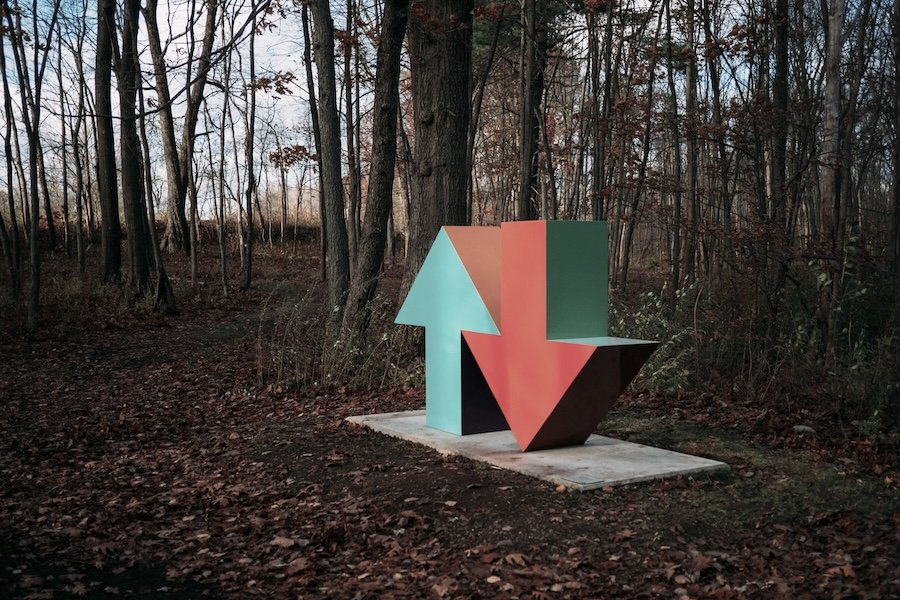
Photo: Suppression of academic freedoms can lead to contradictory consequences. Photo by Susan Q Yin on Unsplash
The Academic Repression Vertical
Scholars investigating the suppression of academic freedoms in Russia often examine this process from a political perspective. From this viewpoint, the primary source of repression is state censorship.
This censorship sometimes specifically targets science and education, and sometimes affects the academic world only tangentially – alongside other social institutions. For instance, the so-called “fake news” laws regarding the information about the Russian military were likely aimed primarily at journalists and opinion leaders; yet they ultimately had a profound impact on academic life as well. In particular, they have fostered a growing atmosphere of suspicion within universities, where faculty members face political risks following denunciations submitted by students and any politicized forms of student activism are ruthlessly suppressed.
The emphasis on the state’s role in shaping educational policy appears completely natural in the context of more than four years of full-fledged war with Ukraine, the militarization of education, and the isolationist shift of Russian science. This approach perfectly illustrates the vertical system of academic repression:
- political decisions affect university administrations
- administrations censor employees
- employees censor students
This logic encompasses both formal instances of violations of academic freedom (for example, the ban on collaborating with organizations deemed “undesirable”—a category that recently came to include Yale University and UC Berkeley) and more informal instances of censorship and self-censorship (for example, subtle recommendations to refrain from researching sensitive or political topics).
Routine Regulation
However, the restriction of academic freedoms is not limited to instances of top-down censorship. In particular, researchers—and, to an even greater extent, students—in the social sciences regularly encounter attempts to regulate their academic freedoms. And by their very routine nature, these attempts are significantly less conspicuous.
This type of regulation is often centered around the demarcation problem: the distinction between scientific and non-scientific knowledge, important and not important, relevant and harmful. This procedure is not, in itself, without merit: it enables scientists to identify gaps and scientific trends, and—most importantly—makes it easier to combat pseudo-scientific or non-scientific approaches.
The problem is that, in Russia, these distinctions are often drawn not so much by international scientific consensus as by the personal convictions of senior academic staff.
For students, this means that the choice of an individual scientific trajectory is largely determined by the personal values of their particular research supervisor.
“Globalists” and “Localists”
In line with Mikhail Sokolov’s article “Sources of Academic Localism and Globalism in Russian Sociology,” it would be logical to assume that such a situation would cause the emergence of two major clusters:
- researchers oriented primarily toward the international scientific agenda (“globalists”)
- scientists who prioritize the “utility” of research for national political interests (“localists”)
However, while conducting interviews as part of my PhD project, which focuses on para-academic knowledge production in Russian philosophy and the social sciences, I noticed a striking degree of similarity between approaches to education across what might be termed “progressive” and “conservative” academic environments.
* The division of academic spheres into “progressive” and “conservative” categories significantly simplifies the landscape of academic life. Undoubtedly, universities of all types are home to individuals holding both conservative and more progressive views. Nevertheless, within the context of this article, I believe it is important to focus on the prevailing perspectives found in major universities—typically located in large metropolitan areas—as opposed to less popular institutions.
Interviews and Respondents
The aim of my interviews was not to study academic freedom per se. Nor do I claim to offer an exhaustive depiction of academic life in Russia—particularly against the backdrop of the radical changes that followed Russia’s full-scale invasion of Ukraine. Nevertheless, the comments made by my respondents strike me as a valuable chance to reflect upon academic freedom, the anthropology of everyday academic life, and the approaches to evaluating scholarly work in Russia during the 2010s.
In the course of research for my project, I conducted 10 in-depth interviews with respondents who had studied at and graduated from sociology or philosophy departments at Russian universities during the 2010s. All of them had experience studying at “progressive” universities in Moscow or Saint Petersburg. Three had experience studying in other fields (outside of the social sciences or philosophy), while two had also studied at regional universities that could be classified as “conservative.”
Under Conditions of Strict Regulation
My respondents who graduated from regional, more conservative universities in the 2010s consistently reported strict regulation of academic life within their institutions. For instance, one of them recounted that at Novosibirsk State University (NSU), students were clearly divided into those who simply wanted to obtain a diploma and those who sought to pursue an academic career at the university.
The former group of students could without facing any restrictions write their theses on virtually any topics—even politically charged ones. Researchers aiming for academic careers, on the other hand, faced strict oversight, according to this respondent. Academic supervisors went as far as determining not only the approach to source materials, but also unilaterally assigning the topics of students’ works.
As a result, many young scientists found themselves at a crossroads, compelled either:
- To accept the rules of the game and adhere to outdated—even Soviet-era—approaches to science, in the hope that the patriarchs would take them under their wing.
- Or to attempt to gain admission to institutions such as the Moscow School of Social and Economic Sciences, the European University at St. Petersburg, or the Higher School of Economics—places where one could count on more open discussion of research and greater academic freedom.
Censorship in Capital Universities
All respondents were aware of the informal division of universities into conservative regional institutions and more progressive metropolitan ones.
However, as my interviews revealed, studying at universities in the capital by no means always guaranteed students a greater degree of freedom from indoctrination—especially when it came to the freedom to choose their research topic or subject. Even in “progressive” universities, one could encounter the suppression of academic freedoms—whether working with the Soviet legacy or contemporary scholarly approaches.
For example, a respondent who had studied at a regional Ukrainian university and subsequently at the Higher School of Economics in Moscow recounted that the faculty of the HSE’s Department of Philosophy actively opposed research dedicated to certain topics—specifically, Soviet philosophy:
Dugin once said of Soviet philosophy that it is nothing but toxic waste—radioactive waste. And that is precisely how our professors treated it: “Don’t read it—it is pure evil, it is Marxism, it is all just that leftist rubbish of yours that you have no business reading. It is harmful and dangerous.”
According to the respondent, even his Ukrainian professors—many of whom held rather conservative political views—were more open to the study of Soviet philosophy and what might be termed “left-wing” twentieth-century European philosophy than were the professors at the HSE. Consequently, the respondent was unable to formally pursue their topic of interest during their master’s and doctoral studies there.
According to another respondent from Saint Petersburg, during the 2010s, the academic interests of students and prospective students in Moscow and Saint Petersburg were influenced by books published by trendy publishing houses, such as Ad Marginem. Even students without established academic interests knew that reading Deleuze, Benjamin, and Foucault was prestigious and fashionable.
HSE’s undergraduate academic program, meanwhile, included virtually no study of twentieth-century philosophy. Students had no opportunity to read the very texts that had inspired many of them to enroll in the university in the first place. Instead, a significant amount of time was devoted to ancient and Russian philosophy.
It may be assumed that such a curriculum resulted not so much from an “anti-Soviet” or “pro-Soviet” stance on the part of instructors at a particular university as from the necessity to comply with state standards. Moreover, some instructors may have assisted students interested in topics not covered by the official curriculum. Nevertheless, in both regional and metropolitan universities, student interests invariably proved to be a secondary factor, exerting little influence on the curriculum, unlike the political positions of academic administrators and professors.
A third respondent encountered censorship while defending their thesis at the HSE Political Science Department. In their final qualifying paper, they cited texts by Deleuze and Guattari, as well as the works of Italian autonomists. During the defense, they received the highest possible grade from both the reviewer and their academic supervisor; however, one member of the committee deliberately assigned a grade of two or one to ensure that the thesis would not receive the maximum score (10 points, according to the HSE grading system).
Subsequently, during an informal discussion following the defense, the student discovered that this had been done deliberately to ensure that the “left-wing, pro-Marxist paper” would not receive the highest mark. The other members of the committee did not challenge this approach.
The Consequences of Censorship for Students
The suppression of academic freedoms can lead to contradictory consequences.
The most common consequence is disillusionment with the academic environment and the abandonment of an academic career. In the cases of my respondents, however, this did not happen—the pressure of the environment did not push them out of the academic world, but rather compelled them to seek out new, unorthodox ways of conducting research (including doing so “to spite” the censors within their universities).
In particular, many began participating in various para-academic projects—some of which I have already described in this blog. Others remained in academia—at this point, often outside of Russia.
The Russian experience confirms that restricting the rights and opportunities of students in the social and philosophical sciences can lead to the institutional degradation of academia. Many students will become disillusioned with their academic careers—and, in particular, with the ability of universities to safeguard their academic freedoms.
However, there is also another side effect. The degradation of universities will not always signal a degradation of science, in the broader sense of the word, of comparable magnitude. On the contrary, researchers may approach scientific practices more creatively — by experimenting, establishing connections with foreign colleagues, and engaging with the literature independently — without the institutional support of universities.
In the case of my respondents, “disillusioned” students’ interest in topics of importance to them did not vanish; it simply moved beyond the confines of formal “academia,” transforming into genuinely uncensored, grassroots, para-academic initiatives.
Consequences for Instructors
The symmetrical stances adopted by faculty members regarding academic freedom proved to be driven not by professional principles, nor even by geopolitical preferences or support of the state-imposed ideology. Curiously, one of the key dividing lines turned out to be a positive or negative assessment of the Soviet past.
In contemporary Russian academia, this serves as a reminder of the significant role of cultural context—specifically, post-Soviet trauma—which influences Russian science at various, not always obvious levels.
One of the most common arguments used by educators to justify restricting academic freedoms is claiming the political nature of certain topics, ideas, or research approaches. Amid the growing polarization of the social sciences, the argument of “politicization”—and, by extension, a lack of scientific rigor—is increasingly becoming a weapon to which administrators and researchers resort whenever it serves their interests.
In particular, this argument allows Russian academic administrators to censor certain approaches with one hand (such as gender studies or contemporary history) while using the other hand to launch new, far more politicized programs (such as Dugin’s “Western Studies” or Konstantin Malofeev’s “History of Empire”).
Russian science is not unique in this regard: a similar utilization of the “politicization” argument can also be seen in the Euro-American academic environment.
For instance, U.S. authorities justified massive cuts to university funding by citing the need to combat “ideologization” and the harmful, discriminatory policies of Diversity, Equity, and Inclusion (DEI). This campaign, among other consequences, led to widespread faculty layoffs—particularly affecting early-career academics on temporary contracts. Moreover, many of these individuals are foreign nationals whose ability to legally remain in the United States depends on their continued employment.
The question arises: What could be more ideologically motivated than a ban on researching certain topics, the manipulation of funding, and the intimidation of migrant faculty members?
* * *
It is not only governments or academic administrators who are prone to pitting science against politics, but also instructors themselves, who impose their own conceptions of the nature of scientific knowledge upon their students. Even the most progressive among them may treat those they view as their political opponents with disdain.
The competition of alternative approaches is a hallmark of a healthy democracy in science. However, mutual accusations of political bias have nothing in common with democracy, science, or academic freedom.



0 Comments