

In the fifth year of the war, Russian academia has entered a qualitatively new dimension of unfreedom.
Yulia Sineokaya
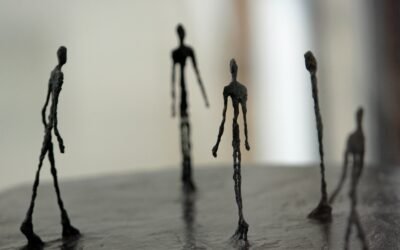
Photo: In 2026, the position that “science stands above politics” is no longer a neutral stance. Photo by Khashayar Kouchpeydeh on Unsplash
Academia 2026
In Russia today, ideas are tantamount to dynamite. Freedom of speech and calls for peace have become criminal offenses. The values of human life, freedom, dignity, rights, and professional reputation have been declared alien to Russians.
The majority of scientists consider themselves hostages and victims of the aggression against Ukraine. Post-2022, solidarity with Russia is called conformism, and a lack of active support for the war is seen as resistance.
For the first time since the war began, scientists are facing the question of the scientific community’s future with the utmost urgency.
Up until 2024, the majority of scientists in Russia managed to maintain their normal way of life, insulated from the reality of the war. Their efforts were focused on finishing the projects they had begun before the war. The inertia of the work carried it forward, and there was an expectation that things would soon return to the pre-war “normal.”
Now, they realize that Russian academia has plunged into the “sovereignty” phase:
- It exists outside the global scientific community.
- Avenues for collaboration with Western researchers and emigrant colleagues are being blocked off.
- Scholars are caught in the ideological vice of the “traditional spiritual and moral values” of the civilization-state.
Russian academia’s complete loss of autonomy has become impossible to ignore.
Turnover of Academic Staff
State repression of academia has dramatically intensified within the past year. With increasing frequency, scientists are declared to be under “foreign influence,” criminal cases are being brought against them, and their books are being removed from stores and libraries.
The campaign to replace, in university leadership positions, authoritative scientific figures with individuals who actively support the Kremlin’s policies has been accelerating since 2021, following the pattern described by Hannah Arendt in The Origins of Totalitarianism. Totalitarian regimes replace competent leaders with incompetent loyalists.
At the 2025 spring general meeting of the Russian Academy of Sciences (RAS), two corresponding members from the Division of Historical and Philological Sciences were controversially denied election as full academicians because, in 2022, they had signed an anti-war letter opposing Russia’s attack on Ukraine and had not renounced their position. Although the vote was split—with half of the academicians favoring the election of these anti-war scholars—their candidacies were rejected.
At the same time, Mykola Azarov—former Prime Minister of Ukraine and co-founder of the Party of Regions—was elected as an academician in the field of mining sciences, despite having an h-index of zero, which is unprecedented for academician candidates.
In 2024, the Institute of Philosophy of the Russian Academy of Sciences updated the Code of Ethics for Official Conduct and Professional Activity of Employees of the Institute of Philosophy of the Russian Academy of Sciences by adding Clause 2.1.13: “Refrain from making public statements directed against the official policy of the Russian Federation.”
Turbulence in Universities
The outbreak of war inaugurated a period of growing turbulence for the higher education system. Nonconformists among the ranks of students and teachers alike continue to be dismissed. On top of that, certain courses are being dropped and new curricula centered on a “values-based socio-humanities core” are being introduced—specifically, “Fundamentals of Russian Statehood” and standardized courses on history and philosophy for all students across the country. The goal of these three disciplines, which will be required starting in the 2026/2027 academic year, is to instill “conscious patriotism” in students.
Since 2025, an unprecedented number of rectors and vice-rectors have been imprisoned for violations of migration politics, misuse of funds, bribery, and corruption. Support for the war and patriotic rhetoric no longer serve as a panacea. Many of those facing prosecution are among the very individuals who signed the 2022 letter from university rectors in support of the “special military operation.”
Over the past two years, university leadership figures in Kaliningrad, Voronezh, Astrakhan, Nizhny Novgorod, Ulyanovsk, Cherkessk, Kurgan, Pskov, Tambov, and elsewhere have been arrested. It is difficult to say how many of the arrests were politically motivated, but the trend of stoking panic in higher education is evident. The wave of denunciations—students against professors and professors against students—has reached its peak for the last quarter-century.
The criminal prosecution of historian of philosophy Svetlana Mesyats, which began in May 2026 on charges of embezzling state funds, is striking in its absurdity. From 2018 to 2024, she headed a scheduled research project at the Institute of Philosophy of the Russian Academy of Sciences entitled “The Legacy of Aristotle: A Preparation of the Complete Works of Aristotle.”
The humiliations, insults, and calls for retribution voiced by radical “Z-activists,” who are using this pretext to intimidate the academic community, along with their demands to shut down the Institute of Philosophy “at the behest of the people,” demonstrate that the “Aristotle Case” is, in fact, political.
What is happening in Russian academia discredits science and education and diminishes public respect for and trust in scientists and the professoriate.
Ilyin and Fedotov as Symbols of War and Peace
Russia’s new political identity as a civilization-state depicts the country as a “besieged fortress” and symbolizes a shift toward open confrontation with the European Union.
To legitimize their policies, Kremlin ideologues turn to the domestic intellectual heritage of a century ago. Today, the names of philosophers Ivan Ilyin (1883–1954) and Georgy Fedotov (1886–1951) serve as a litmus test for proponents and opponents of Russia’s new political identity as a civilization-state.
Putin’s civilization selectively restores elements of the Russian Empire—both the White (Tsarist) and the Red (Soviet). The name of Ivan Ilyin serves as the symbol of the “war party,” representing Russia’s imperial future and the struggle against the West. The name of Georgy Fedotov has come to symbolize the “party of peace,” which advocates for Russia’s European future and rejects Russian imperialism.
The works of Ivan Ilyin are used to justify the use of military force, raise statism to the top of the value hierarchy, assert national exceptionalism, and unite the state with the Orthodox Church—an institution that has come to legitimize death and suffering as a mission.
Ilyin’s ideas can be discerned in the state’s critique of pacifism, secularism, and liberalism.
The anti-communist Ilyin, who saw the Russian Revolution and the formation of the USSR as the “greatest, most shameful failure in world history,” has today become a key philosophical authority for President Putin, who once called the fall of the USSR the “greatest geopolitical catastrophe.”
Like Ilyin, Fedotov, who left Russia after the 1917 Revolution, fought for liberation from Bolshevism. Yet unlike Ilyin, who viewed the West as a threat, Fedotov considered Russia an integral part of Europe. Fedotov argued that Russia could not isolate itself from Europe, just as Europe could not exist without interacting with Russia.
War as the Future
In Russia today, the vision of the future is endless war:
“The West is Satan’s kingdom, and the mission of Russians is to defeat it” (Dmitry Medvedev, Deputy Chairman of the Security Council of Russia and President of Russia from 2008 to 2012).
Z-intellectuals, discussing modern trends and impending events, cite Lars von Trier’s film “Melancholia” as prophetic, quoting the words of the protagonist:
“The earth is evil. We don’t need to grieve for it. Nobody will miss it…All I know is, life on earth is evil.”
In his work Mourning and Melancholia, Freud writes about melancholy as a feeling of deep, suffering dejection; a lack of interest in the outside world; and a loss of the ability to love, including oneself. It is evident that the melancholic attitude toward life and death cultivated by the pro-war camp reinforces the drive toward tyranny and the compulsion to violence.
In the fifth year of the war, the position that “science stands above politics” is no longer a neutral stance, but rather represents a choice based on personal values.
Academic Sacrifices
Andrei Tarkovsky’s film The Sacrifice serves as a symbol of the Russian academic community—both within and outside Russia—that positions itself as the “party of peace.” The climax of the movie is the protagonist’s prayer:
“Lord, save us in this terrible time…Save those who love You and believe in You. And save those who do not believe in You. They were blind and never gave You a thought, because they had never truly known misery. Save all those who, in this hour, have lost their hope, their future, their lives, and even the very possibility of submitting to Your Will. All those now consumed by terror, those who feel the End is near, who fear not for themselves but for their loved ones. All those whom no one but You can protect. For this war is the last war. And after it, there will be neither victors nor vanquished, neither cities nor villages, neither grass nor trees, neither water in the wells nor birds in the skies…”
The Russian scientific world has been weakened by academic emigration. For the first two years of the war, a large share of scientists remained quiet, attempting to preserve their connections with Western colleagues and Russian emigrants while simultaneously trying to accept and adapt to the reality around them to avoid falling victim to repression.
Russian colleagues chose to work on “ideologically neutral” topics, while striving as best they could to push back against the obscurantism of radicals who persisted in trying to take their places in academia. During the early years of the war, their support for the Kremlin’s agenda took the form of loyal expert assessments, participation in the work of state institutions, and conformist media appearances.
It is no longer possible to remain neutral. Whereas prior to 2024, propaganda tasks were enthusiastically carried out by “Z-activists” from the fringes of academia, university professors and research staff from Russian Academy of Sciences institutes are now being mobilized to undertake these tasks.
Russian academia participates in teaching the state agenda at universities, delivers presentations in occupied Ukrainian territories, and takes part in the “patriotic education” of the population and the drafting of new standardized textbooks for schools and universities.
They do not cite foreign agents or employees of undesirable organizations; they carry out orders to send students to war—today, the figure is 2% of students annually.
Since 2026, on the proposal of the head of the Russian Academy of Sciences, Academician Krasnikov, universities and research institutes will reopen “operations departments” with curators from the special services. “Operations departments” are KGB divisions that existed in Soviet times to exercise control and ensure secrecy.
Academia justifies its collaborationism by citing an absence of any tendency toward overzealousness and a refusal to view the world in black-and-white terms.
Academia Outside of Russia
Only émigrés can afford to openly oppose the Kremlin’s policies. The academic diaspora that has left Putin’s Russia—much like the post-revolutionary emigration of a century ago—seeks to establish institutional structures, creating new publishing houses, journals, schools, universities, and research centers abroad.
In the previous century, émigré scholars viewed their mission as preserving national and cultural identity and fostering Russian-language intellectual and religious traditions abroad. Today, the primary goal of humanities scholars who have left the country is different: to become an integral part of the global scholarly community.
The “sovereignization of science” in Russia has also dealt a blow to the international academic community, depriving Russian Studies scholars of access to their subject matter. Western academics, including those who have not publicly spoken out against Russian aggression, have found themselves at an impasse. Trips to Russia and collaboration with Russian colleagues have become virtually impossible.
Consequently, a search has begun for alternative approaches and methods whereby to study an increasingly self-isolating Russia: working with open data from social media and online archives, and traveling to regions neighboring Russia, including former Soviet republics and Eastern European countries, where the Russian diaspora is concentrated. Students are now sent to these locations under the Erasmus+ program to practice the Russian language.
It is too early to judge whether the Russian academic emigration of 2022 was successful. In general, Russia’s interaction with the international academic environment evokes cautious optimism, although after four years of war, only 15–20 percent of Russian colleagues had been able to find a place for themselves in the European academic environment.
A new trend is evident: scientists who have left Russia are seeking employment at universities in the East—such as in China, Malaysia, and the United Arab Emirates—rather than in the European Union or the United States, where vacancies are virtually non-existent. Upon the conclusion of “Science at Risk” fellowship programs, many colleagues are forced to consider a career change in order to remain in the West.
About a third of those who left Russia after the war began were forced to return after failing to find their footing in their new locations, despite the growing risk of persecution and skyrocketing rates of depression, particularly among the liberal intelligentsia.
* * *
The war and the machinery of repression in Russia are gathering momentum. The space for thought, freedom, communication, and friendship is shrinking. Russia is drifting forward into the past, back to 1984—not Chernenko’s 1984, but rather Orwell’s.
Despite the gathering uncertainty and troubling forebodings, I believe in the victory of life over death.
In time, Aristotle’s prophecy from the treatise On the Heavens—ουδεν παρα φυσιν αιδιον (“nothing contrary to nature is eternal”)—will be fulfilled once again.


0 Comments