In 2025, the Russian government asserted its ideology, sought enemies in the West, and tried to create an alternative to globalization.
DMITRY DUBROVSKY


In 2025, the Russian government asserted its ideology, sought enemies in the West, and tried to create an alternative to globalization.
DMITRY DUBROVSKY

A master framework for a discipline or a language of dependence?
ANDRE ASINA

In Search of Freedom and Knowledge
IRINA CHUDOVA

A Timeline of the Dissolution
DMITRY DUBROVSKY
How universities around the world are escaping authoritarian pressure and disaster.
Part 2.
SOFIA SMYSLOVA

How universities around the world are escaping authoritarian pressure and disaster.
Part 1.
SOFIA SMYSLOVA

Benjamin Nathans explores the phenomenon of academic dissidence in the USSR.
DMITRY DUBROVSKY
Universities as Tools of Power
IRINA BUSYGINA
After 35 years, the planned economy system is returning to Russian higher education.
DMITRY DUBROVSKY

Drivers and Consequences of Russia’s Academic Isolationism.
THEODORE P. GERBER

What goals do sanctions against Russian academia actually achieve?
DMITRY DUBROVSKY

Scale, mechanisms, and countermeasures to combat the issue
ANDREY ROSTOVTSEV

Contemporary Reflections on the Role of Women in Russian Academia
EKATERINA ZIBROVA
Part 2. Science and Higher Education in Putin’s Russia: From Recentralization to Hybrid Ideologization
DMITRY DUBROVSKY

Part 1: The Structure of Interactions between Science, Higher Education, and the State in the Soviet Union.
DMITRY DUBROVSKY
Emigration is an attempt to preserve one’s scientific identity in a world where borders have become an instrument of violence—and science an act of resistance.
At the request of the authors, names are not published.

Why specialists who have left the country are combining formal institutionalized activities with informal ones
SOFIA SMYSLOVA

Part 2: Abroad
DMITRY DUBROVSKY

Part 1: Within the Country
DMITRY DUBROVSKY
A study of the discourse of Russian and Kazakh teachers.
IRINA CHUDOVA

Russia has compiled lists of scientific journals and publications that can be counted by scientists in their reports to their employers or grantors.
AK
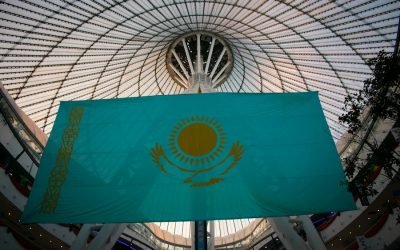
A new study examines the barriers academics face and how their experiences and demographics influence their views.
AIDANA TOREBEKOVA